


When it comes to using spherical roller bearings, the shaft plays a crucial role in ensuring the smooth operation and longevity of the bearing system. As a spherical roller bearings supplier, I've seen firsthand how important it is to meet the right shaft requirements. So, let's dive into what you need to know about shaft requirements when using these bearings.
Shaft Material
The material of the shaft is a fundamental aspect. Generally, shafts are made of steel, which offers good strength and stiffness. High - quality alloy steels are often preferred because they can withstand the high loads and stresses that spherical roller bearings might be subjected to. For example, some applications demand shafts made of through - hardened steel, which has uniform hardness throughout its cross - section. This is great for applications where the shaft will experience high and fluctuating loads, like in heavy machinery.
On the other hand, case - hardened steel shafts are also popular. They have a hard outer layer and a tough inner core. This combination provides excellent wear resistance on the surface where the bearing contacts the shaft, while maintaining good shock - absorbing properties in the core.
Shaft Diameter
Getting the shaft diameter right is super important. The diameter of the shaft should be in accordance with the bearing's inner diameter. Most spherical roller bearings have standard inner diameters, and the shaft must match these dimensions precisely. A shaft that is too large can cause the bearing to be over - pressed during installation, leading to premature wear and possible failure. Conversely, a shaft that is too small won't provide a proper fit, which can result in the bearing slipping on the shaft, causing vibrations and reducing the overall efficiency of the system.
For example, if you're using a BS2 - 2210 - 2RS/VT143 Bearing 50mm90mm28mm, the shaft diameter needs to be 50mm. Any deviation from this can lead to problems down the line.

Shaft Surface Finish
The surface finish of the shaft is another key factor. A smooth shaft surface is essential for proper bearing operation. Rough surfaces can cause increased friction between the bearing and the shaft, leading to heat generation and accelerated wear of the bearing's inner race.
The recommended surface roughness for shafts used with spherical roller bearings is usually in the range of Ra 0.4 - 1.6 µm. This smooth finish allows the bearing to rotate smoothly on the shaft, reducing the risk of damage and extending the bearing's service life. Special machining processes, such as grinding, are often used to achieve the required surface finish.
Shaft Tolerances
Tolerances refer to the allowable variation in the dimensions of the shaft. In the case of shafts for spherical roller bearings, both dimensional and geometric tolerances are important.
Dimensional tolerances ensure that the shaft diameter is within the acceptable range. For example, the shaft diameter might have a tolerance of ±0.01mm depending on the application and the bearing requirements. Geometric tolerances, on the other hand, deal with the straightness, roundness, and cylindricity of the shaft. A shaft that is not straight can cause uneven loading on the bearing, leading to premature failure. Similarly, if the shaft is not round or cylindrical, it can affect the bearing's ability to rotate smoothly.
Shaft Shoulder Design
The shaft shoulder is an important part of the shaft design when using spherical roller bearings. The shoulder provides a location for the bearing and helps to keep it in place axially. The height and angle of the shaft shoulder are critical.
The shoulder height should be sufficient to support the bearing properly but not so high that it interferes with the bearing's operation. A common rule of thumb is that the shoulder height should be about 0.5 - 0.7 times the bearing's inner ring width. The angle of the shaft shoulder is usually 15 - 30 degrees. This angle helps to guide the bearing onto the shaft during installation and ensures that the bearing is seated correctly.
Shaft Installation and Mounting
Proper installation and mounting of the shaft are also vital. Before installing the bearing on the shaft, the shaft should be cleaned thoroughly to remove any dirt, oil, or debris. This helps to prevent contaminants from getting into the bearing and causing damage.
When mounting the bearing on the shaft, a suitable mounting method should be used. For light - load applications, a gentle press - fit might be sufficient. However, for heavy - load applications, heat - shrink or hydraulic mounting methods are often preferred. These methods ensure a tight and proper fit between the bearing and the shaft, reducing the risk of slippage and premature wear.
Applications and Their Special Requirements
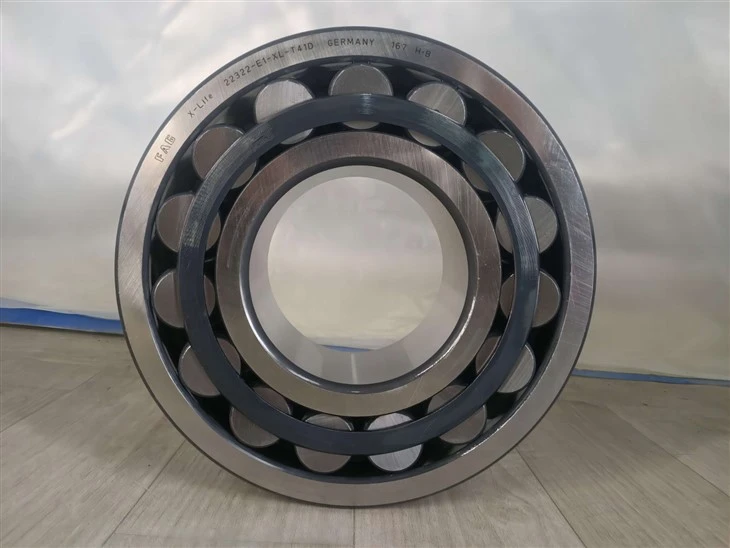
Different applications have different requirements for the shaft when using spherical roller bearings. For example, in vibrating screens applications, like the FAG 22322 - E1 - XL - T41D - Vibrating Screens Spherical Roller Bearing, the shaft must be able to withstand high - frequency vibrations. This means that the shaft material should have good damping properties to reduce the transmission of vibrations. Additionally, the shaft should be well - supported to prevent excessive deflection under the dynamic loads of the vibrating screen.
In mining or construction equipment, where the loads are extremely high, the shaft needs to be made of high - strength materials and have tight tolerances. The 22320EK Bearing Spherical Roller Bearings used in such equipment require a shaft that can handle the heavy radial and axial loads associated with these applications.
Conclusion
In conclusion, meeting the right shaft requirements is essential when using spherical roller bearings. From the material and diameter to the surface finish, tolerances, shoulder design, and installation, every aspect plays a role in ensuring the optimal performance of the bearing system. As a spherical roller bearings supplier, I can attest to the fact that paying attention to these details can lead to longer - lasting bearings, reduced downtime, and overall cost savings for your operations.
If you're in the market for high - quality spherical roller bearings or need more advice on shaft requirements, don't hesitate to reach out. We're here to help you find the right solutions for your specific needs and ensure that your equipment runs smoothly.
References
- "Bearing Engineering Handbook", Various experts in the bearing industry
- Manufacturer's technical documents for spherical roller bearings


